

“The best camera is the one you have with you” said the photographer Chase Jarvis as mobile phone photography began to be popular. And it’s quite true. I took this iPhone picture in the Blue Ridge mountains on a personal vacation to visit friends.

Sunrise through morning mist, Blue Ridge Mountains at Big Meadows
It’s also true that good pictures are made by being in the right place at the right time. Ansel Adams said: “Sometimes I do get to places just when God’s ready to have somebody click the shutter.”
It is no wonder that camera phones are increasingly popular – they are always always with us. When you come upon that moment God presents to you, you can grab a snapshot; and here I will add one more quote from Ansel Adams: “You don’t take a photograph, you make it”.
The photo in the misty Blue Ridge morning presented itself quite suddenly but I did have a couple of minutes to consider what I was doing and composed the photo of the rocks and trees within the frame of the iPhone. I positioned my point of view so that I could exactly get the exact balance and that sunburst breaking between a branch of a tree. As joyful as the process was, it was serious and I needed to be quite mindful.
Most of my recent workshops have been for camera phone photographers. While I certainly enjoy the more serious workshops with tripods and long critiques, it is more common for garden clubs and trade groups to want a small workshop specifically for the camera phone. Just about everybody has one of these devices but seldom take them seriously. That is a shame because they are truly powerful tools.
I began to truly appreciate their potential on a trip to Chilé a number of years ago when I dropped my good camera on the second day and had to use my iPhone for the entire trip. This photo was taken from the living room of the wonderful designer Cristobal Elgueta Marinovic.
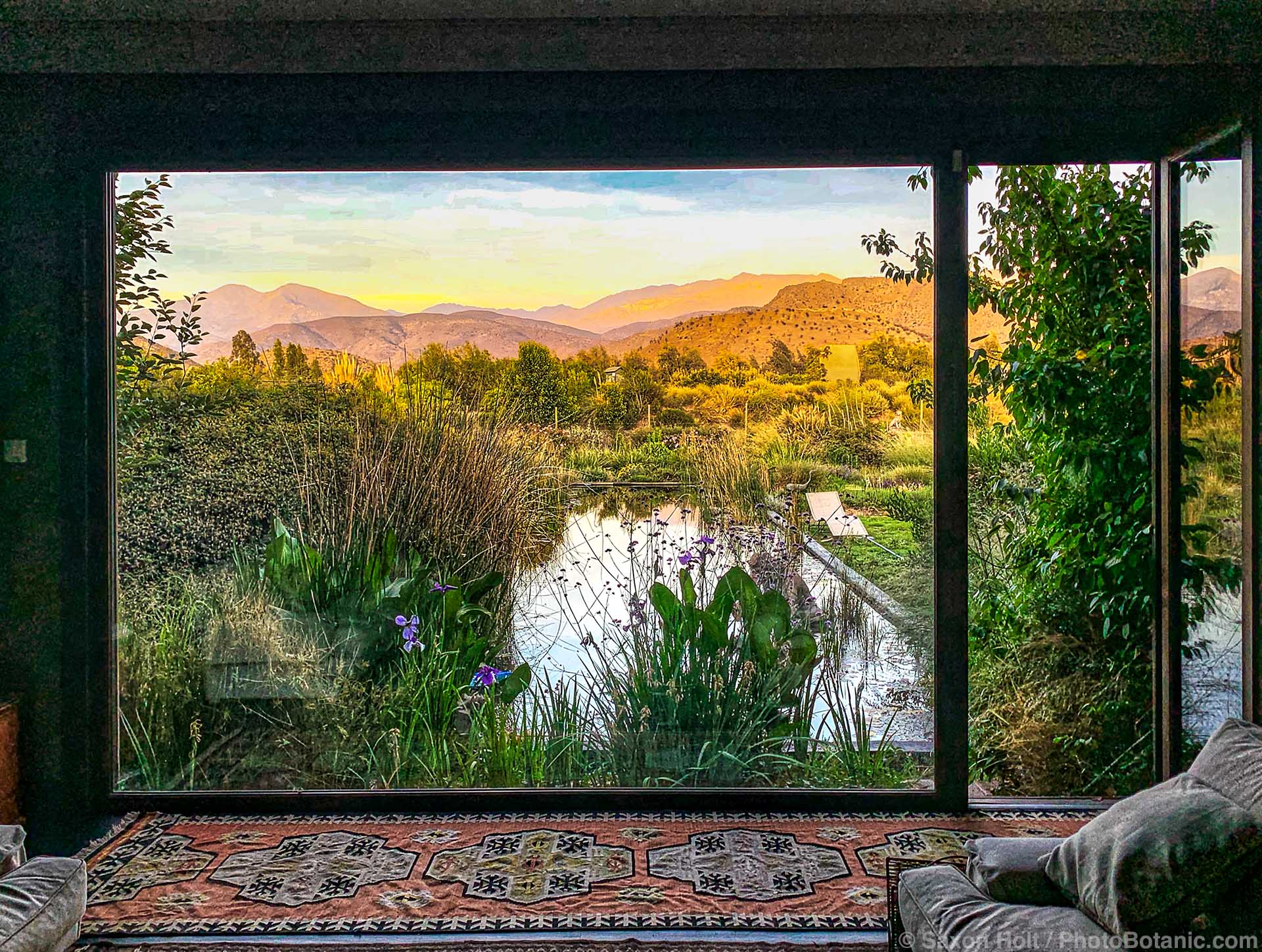
The garden of Cristobal Elgueta Marinovic
Almost all of the lessons here in the PhotoBotanic Workshops apply to any camera. The most important tip to getting better photographs is being conscious of what you’re doing, as Ansel Adams says – to make a photo not to take one. Almost as soon as you take your camera phone seriously you will take better pictures. Don’t just raise the phone in front of your face and click a picture but actually look and carefully compose the story of what you see.
I have found using the camera phone so much fun that when I travel for a personal vacation I no longer take my heavy camera and tripod to capture those beautiful time-consuming photos. Even when I do bring along the professional gear there are times of serendipity when I’m not working and just being a tourist. In those moments, understanding some of the basic principles of photography come into play, no matter the camera.
In Paris I was dashing through the Tuileries garden on the way to the pedestrian bridge that crosses the Seine to meet my wife at Musée d’Orsey. Just as I was about to leave the garden, I looked to my right between the allé of trees and Bam! a photo appeared.

Tuileries, Paris, Europe vacation, 2022
I saw the composition immediately, and knew it would be a good photo if I applied my own composition lessons to create a balanced photo.

Tuileries diagrammed, Paris, Europe vacation, 2022
I have detailed that thought process in a new camera phone series I am now doing with Pacific Horticulture. You can read that first article here or find some of the PhotoBotanic workshop tips that apply to making a good composition with any camera in the Good Garden Photography e-book.
I am enjoying writing this series which we have titled Camera Phones Are Cameras to emphasize it is not just the iPhone that can take good photos but any of these remarkable devices we use to connect to friends, to the the internet, and world events, can also capture the moment when “God’s ready to have somebody click the shutter”.


Leave A Comment